

Tariffs do not appear as a line item on a freight invoice, but they can still affect freight costs. They can change shipping demand, lane balance, border paperwork, truck availability and timing. Shippers can reduce risk by confirming customs details early, requesting itemized quotes, building flexibility into pickup dates and working with a cross-border freight partner that understands current market conditions.
What changed with the U.S. – Canada tariffs?
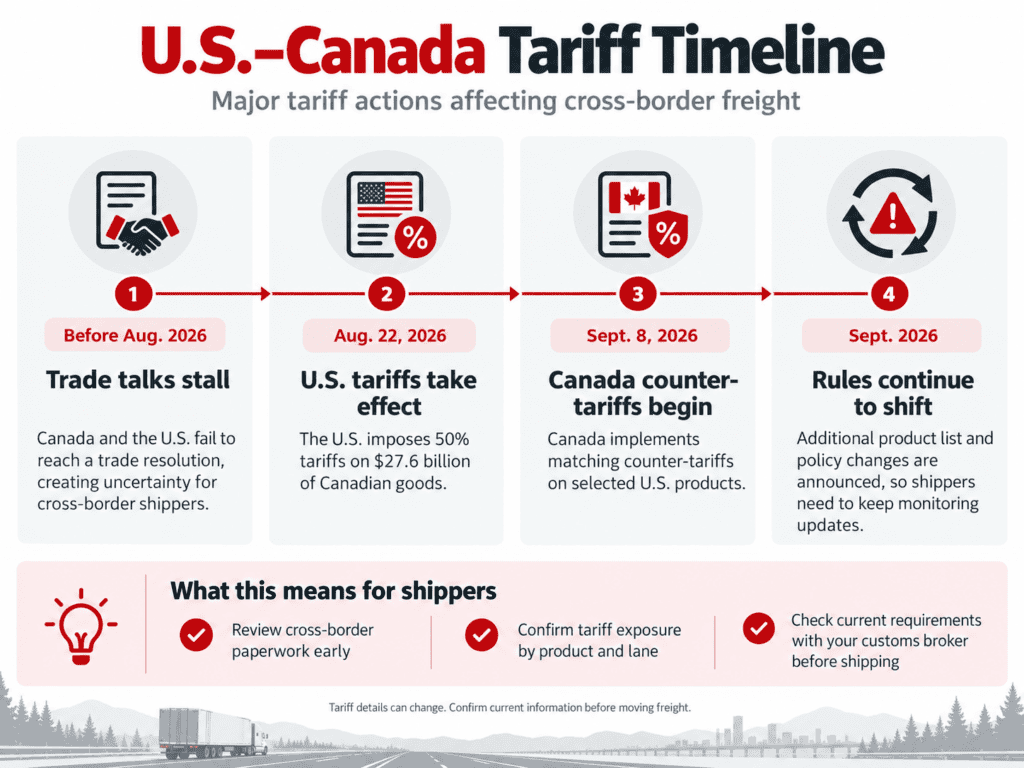
In August 2026, the United States introduced a 50% tariff on roughly US $20 billion of specified Canadian goods, effective August 22. Canada announced counter-tariffs on a comparable value of U.S. imports, effective September 8, with rates of 15%, 25% or 50% depending on the product. The measures affect specific goods rather than all Canada–U.S. shipments.
Separate sector-specific measures also affect certain products, including steel, aluminum and automotive goods. Rates, exclusions and eligibility can differ by product and country of origin, so shippers should check the rules applicable to their particular shipment.
Source: Department of Finance Canada, August 25, 2026,
Current Canadian counter-tariff list
These details may continue to change. Treat this section as a current snapshot, not a final list.
Before booking a cross-border load, confirm product-specific duties, eligibility and documentation requirements with your customs broker.
How do tariffs affect freight
Tariffs are charged on goods, not on the trucking service itself. But they can still affect freight costs indirectly.
1. Tariffs can change freight demand
When duties make a product more expensive to sell across the border, some shippers delay orders, reduce volume or move freight to different markets. Others rush goods ahead of tariff deadlines.
That means a lane can be quiet one month and tight the next. When capacity changes quickly, freight rates can move with it.
Lower demand does not always mean higher freight rates. Rates may fall if available trucks outnumber shipments, or rise when a sudden demand spike reduces available capacity.
2. Border paperwork becomes more important
When duties are involved, shipment details receive more attention. Product origin, classification, value, importer information and commercial documents all need to be accurate.
A load with missing or inconsistent documents can sit at the border. Delays can lead to waiting time, missed delivery appointments and added cost.
3. Equipment can get out of balance
When trade flows shift, trucks do not always end up where the next load is needed. A carrier may have equipment available in one direction but limited options coming back.
That imbalance can make certain cross-border lanes harder to cover or more expensive, especially when demand changes quickly.
TEAM INSIGHT
At Titan Transline, we’ve seen a significant increase in cross-border freight rates. Changes in freight volumes and equipment availability are making it more challenging to secure competitive pricing, particularly on lanes where there are limited opportunities for return loads.
We’re also seeing how important flexibility has become. When customers can adjust pickup or delivery dates, it gives us more opportunities to source available equipment, explore different transportation options and help minimize the impact of rising freight costs.
~ Alyssa Chartrand
4. Backhaul availability and spot rates can change
When fewer loads move in one direction, carriers may have to travel farther to find a return load or reposition equipment. Spot quotes can respond quickly to these changes, while contracted rates may adjust more gradually. The effect depends on the particular lane, direction, equipment and timing.
Which industries and shipping lanes are most affected?
The biggest impact is usually felt by shippers moving goods that are directly named in tariff actions or tied to industries with integrated cross-border supply chains.
These may include:
- Manufacturing parts
- Building materials
- Automotive freight
- Steel and aluminum related goods
- Food and beverage products
- Consumer goods with cross-border suppliers
Lanes such as Ontario to Michigan, Ontario to New York and Quebec to the U.S. Northeast may need extra planning because they support high volumes of manufacturing, retail and cross-border commercial freight.
Cross-border shippers can read more on our cross-border trucking page.
Five steps shippers can take now
1. Map your cross-border exposure
List your cross-border lanes, products and suppliers. Flag anything on a tariff list or likely to be added.This helps you see which shipments need extra attention before booking.
2. Get customs details prepared ahead of time
Do not wait until the truck is already moving, or booked. Confirm product classification, country of origin, importer details and whether goods may qualify under CUSMA/USMCA before pickup to avoid any border or customs related delays.
For more detail, read Titan’s customs clearance guide.
3. Request an itemized freight quote
Request pricing that separates freight, fuel, border and accessorial charges so you can compare accurately.
Tariffs and duties are separate from freight charges, so shippers should compare freight cost and landed cost together. (See Tariffs vs. Freight Charges.)
4. Build flexibility into pickup dates
When it’s possible, flexible pickup and delivery windows can help reduce cost and improve coverage. Even a small amount of flexibility gives the freight team more room to match the shipment with the right carrier and equipment.
Useful next reads:
TEAM INSIGHT
One of our customers temporarily shifted their focus to domestic shipping to avoid additional tariff costs, expanding their business into Western Canada while focusing their growth on Canadian markets until tariffs stabilized.
For shipments that still needed to move into the U.S., they adjusted their shipping strategy by consolidating smaller shipments into larger loads rather than shipping multiple smaller orders.
This allowed them to reduce the frequency of cross-border shipments, make better use of available truck capacity and manage transportation costs more effectively while continuing to serve their U.S. customers.
How Titan helps with tariff affected cross-border freight
Titan helps customers plan and coordinate Canada–U.S. transportation by reviewing lanes, equipment requirements, timing and shipment details before the load moves. We work alongside customers, carriers and their designated customs brokers to keep transportation details and communication aligned.
If a customs documentation issue or clearance hold arises, Titan can help communicate updates between the parties and make customers aware of transportation impacts. Customs clearance decisions, tariff assessments and duty eligibility remain the responsibility of the relevant authorities, importer and customs professionals
Titan’s team can help:
- Review Canada – U.S. lanes
- Recommend timing and equipment options
- Coordinate shipment-related communication with customs brokers
- Communicate shipment status updates
- Prepare an itemized transportation quote based on your shipments requirements
This article is general information only, not customs, legal or tax advice. Confirm duties, eligibility and documentation with a licensed customs broker.
Need a quote that reflects today’s market?
Send us your pickup, delivery and freight details. Our team will come back with a clear price and a recommended plan.
Get a Quote · 1-844-855-8342 · quotes@titantransline.com

Frequently Asked Questions
Do tariffs increase trucking rates?
Not directly. Tariffs are duties on goods and are usually charged to the importer. However, tariffs can affect trucking rates indirectly by changing demand, lane balance, carrier availability and border processing time.
Who pays the tariff on a cross-border shipment?
The importer of record is generally responsible for payment to customs authorities, though commercial terms may allocate the economic cost differently between buyer and seller. Consult your customs broker and commercial agreement.
Are tariffs included in a freight quote?
No. Freight quotes usually cover transportation costs such as line haul, fuel, border coordination and accessorial charges. Tariffs, duties, taxes and customs broker fees are separate unless otherwise stated.
Is cross-border freight still moving?
Yes. Freight continues to move between Canada and the U.S., but timing, demand and documentation requirements may shift depending on the goods, lane and current rules.
Should I wait for a trade deal before shipping?
Waiting can create its own risk if customers, production schedules or inventory needs are already committed. Many shippers are planning for multiple options instead of waiting for a single outcome.
How can titan help with tariff-related freight planning?
Titan can review shipment details, lane requirements, equipment and scheduling, provide a freight quote, and coordinate transportation-related communication with your customs broker. Titan does not determine duties or guarantee customs release.