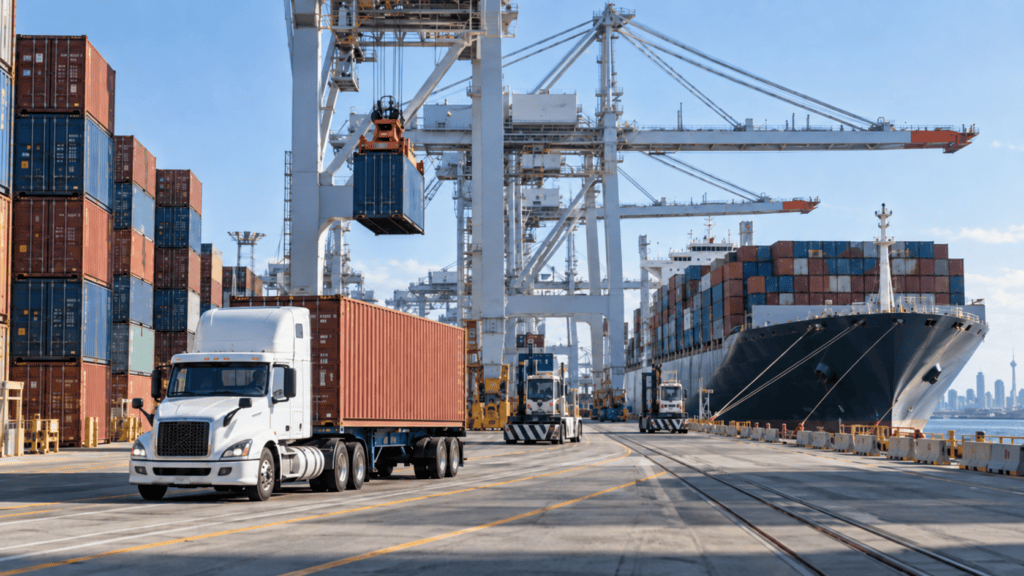

Port fees can add unexpected costs to container shipments if pickups, appointments, customs clearance, and delivery schedules are not properly coordinated. Moving freight through a port involves more than simply picking up a container and delivering it to its destination.
Container availability, customs clearance, port appointments, delivery schedules, free time, and empty-container returns all need to line up. When they do not, extra charges can add up quickly.
Understanding common port fees, including demurrage, detention, storage, drayage, and destuffing costs, can help shippers plan ahead and reduce avoidable expenses.
Titan Transline helps businesses coordinate port and container freight throughout Canada and the United States, including drayage, transloading, destuffing, time-sensitive deliveries, and specialized container chassis transportation.
Port Fees and Container Charges at a Glance
Not every container-related charge is technically a port fee. Some are charged by terminals, some by ocean carriers, and others are transportation or handling costs.
| Charge | What It Means |
|---|---|
| Demurrage | Charges when a container remains at the terminal beyond allowed free time |
| Terminal Storage | Storage charges for containers or cargo remaining at the terminal |
| Detention / Per Diem | An hourly charge that applies when loading or unloading takes longer than the carrier’s allotted free time. Most carriers typically allow up to two hours of free time at pickup and delivery before detention charges begin. |
| Drayage | Short-distance transportation between the port and another facility |
| Destuffing / Transloading | Removing freight from a container or transferring it to another trailer |
| Waiting / Chassis Charges | Additional driver time or equipment costs associated with the container move |
Exact charges and free-time rules vary by port, terminal, ocean carrier, and shipment.
What Are Port Fees?
Port fees are costs associated with moving, handling, storing, or processing cargo through a marine terminal.
Common charges can include:
- Terminal handling fees
- Wharfage fees
- Port Storage
- Demurrage
- Detention
- Drayage
- Chassis charges
- Driver waiting time
- Customs examination charges
- Destuffing and transloading
Some charges are unavoidable. Others are often caused by delays, missed appointments, late container pickups, or poor coordination.
What Is the Difference Between Demurrage, Detention, and Storage?
These terms are often confused, but they can refer to different charges.
Demurrage generally applies when an ocean carrier’s container remains at the port or terminal beyond the permitted free time.
Detention, sometimes called per diem, generally applies after the container leaves the terminal and is not returned within the carrier’s allowed timeframe.
Terminal storage may be charged separately when cargo or containers remain on terminal property longer than permitted.
Common causes include:
- Customs or documentation delays and holds
- Missed appointments
- Port congestion
- Transportation booked too late
- Receiver delays
- Late empty-container returns
For U.S. port shipments, the Federal Maritime Commission provides guidance on detention, demurrage, and free-time practices.
What Is the Last Free Day?
The Last Free Day, or LFD, is one of the most important dates in port and container transportation.
It is generally the final day a container can remain at the applicable terminal before certain storage or demurrage charges begin.
The LFD can vary depending on the:
- Ocean carrier
- Port or terminal
- Container type
- Vessel discharge date
- Customs status
- Service agreement
Shippers should confirm the LFD for each container rather than assuming every shipment receives the same amount of free time.
How Can You Avoid Extra Port Fees and Charges?
Planning the entire container movement in advance is one of the best ways to reduce avoidable port fees and additional charges.
Arrange Transportation Early
Do not wait until the Last Free Day to find a truck.
Port appointment availability can become limited, especially during busy periods. Arranging transportation early gives your logistics provider more time to coordinate the driver, chassis, port appointment, and delivery schedule.
Track Container Availability
A vessel arriving does not necessarily mean the container is immediately available for pickup.
Monitor the vessel arrival, container discharge, release status, and Last Free Day.
Confirm Customs Clearance and Documentation
A container cannot leave the terminal until the required releases are complete.
Before dispatch, confirm that customs documentation and pickup information are in place.
For Canadian imports, the Canada Border Services Agency outlines the requirements for the release of commercial goods.
Make Sure the Receiver Is Ready
The container needs somewhere to go after leaving the port.
Confirm delivery hours, appointments, unloading equipment, labour availability, and whether the shipment will be live unloaded or dropped.
Plan the Empty Return
The move does not end when the freight is delivered.
Carrier-owned containers normally need to be returned to an approved terminal or depot within the allowed timeframe. Late empty returns can lead to additional detention charges.
Consider a Pre-Pull When Necessary
A pre-pull involves removing a container from the terminal and temporarily staging it before final delivery.
This may be helpful when the container needs to leave the port before its Last Free Day but the receiver cannot accept it yet.
What Are Drayage Charges?
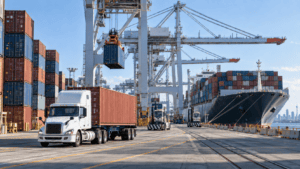
Drayage is the short-distance movement of containerized freight, usually between a marine terminal and a warehouse, rail yard, distribution centre, transload facility, or consignee.
Drayage costs may be affected by:
- Distance
- Container size and weight
- Chassis requirements
- Port appointments
- Driver waiting time
- Fuel and tolls
- Live unload or drop requirements
- Empty-container return location
Additional costs may also occur if the chassis and container are located at different facilities or if the driver experiences extended wait times.
What Are Destuffing and Transloading Costs?
Destuffing means removing cargo from a shipping container.
Transloading generally involves transferring the freight onto another trailer or mode of transportation.
These services may be useful when:
- The final destination cannot accept a sea container
- The container needs to be returned quickly
- Freight needs to move inland on another trailer
- Multiple deliveries are required
- Cargo requires temporary storage
- Oversized freight needs specialized handling
Costs depend on the freight, labour, equipment, handling requirements, and storage time.
Planning destuffing or transloading in advance can help reduce delays and keep the container moving.
How Does Titan Transline Help With Port Freight?
Port transportation involves coordinating more than a truck.
Titan Transline helps businesses manage port and container freight throughout Canada and the United States, including:
- Port and terminal pickups
- Container chassis transportation
- Drayage
- Live unloading
- Drop-and-pick shipments
- Destuffing and transloading
- Warehousing and temporary storage
- Empty-container returns
- Flat racks and oversized freight
- Breakbulk and project cargo
- Direct-discharge shipments
- Deliveries coordinated with crane crews or riggers
- Specialized freight requiring permits or escorts
By planning the port pickup, delivery requirements, and empty return together, potential delays can often be identified before they become additional costs.
Frequently Asked Questions About Port Fees
What Is the Difference Between Demurrage and Detention?
Demurrage generally applies while a container remains at the terminal beyond permitted free time. Detention generally applies when the container has left the terminal but is not returned within the allowed timeframe.
What Does LFD Mean in Container Shipping?
LFD means Last Free Day. It is generally the final day a container can remain at the terminal before certain additional charges begin.
Can Demurrage and Storage Be Charged Separately?
Yes. Ocean carrier demurrage and terminal storage may be separate charges depending on the carrier, terminal, and shipment.
What Is a Pre-Pull?
A pre-pull is when a container is removed from the port and temporarily staged before final delivery, often because it needs to leave the terminal before the receiver is ready.
Can Titan Help With Destuffing and Transloading?
Yes. Titan Transline can coordinate destuffing and transloading when freight needs to be removed from an ocean container, stored, reorganized, or transferred to another trailer.
Stay Ahead of Port Fees
Avoiding unnecessary port fees comes down to planning ahead.
Know when the container is available. Confirm the Last Free Day. Arrange transportation early. Make sure customs releases are complete. Coordinate the receiver, and plan the empty return before the container leaves the port.
Titan Transline works with businesses moving containerized, oversized, breakbulk, and project freight through ports across Canada and the United States.
Need help with port drayage, container transportation, or a time-sensitive port shipment? Contact Titan Transline for a personalized freight quote.