

The trucking and logistics industry has its own language. Understanding common trucking terms, freight terms, shipping terminology, and logistics terms can make it much easier to book freight, compare quotes, communicate with carriers, and understand what is happening during a shipment.
Terms like BOL, POD, LTL, FTL, detention, freight class, drayage, deadhead, reefer, and accessorial are used every day in transportation, but they are not always obvious to someone who does not work in logistics.
This freight glossary explains some of the most common trucking terms, shipping jargon, and freight terminology businesses should know when moving goods throughout Canada and the United States.
Common Trucking Terms at a Glance
| Term | What It Means |
|---|---|
| BOL | Bill of Lading; the main shipping document describing the freight |
| POD | Proof of Delivery confirming that a shipment was delivered |
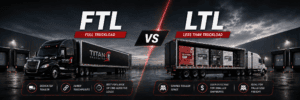
| FTL | Full Truckload; dedicated trailer capacity for one shipment |
| LTL | Less Than Truckload; multiple shipments share trailer space |
| Freight Class | Classification used when rating many LTL shipments |
| Detention | Hourly charge when loading or unloading exceeds the carrier’s free time |
| Layover | Charge that may apply when a driver is delayed for an extended period |
| Deadhead | Driving a truck without freight towards the pickup location |
| Backhaul | Freight moved on a return route after an outbound delivery |
| Reefer | Refrigerated trailer for temperature-controlled freight |
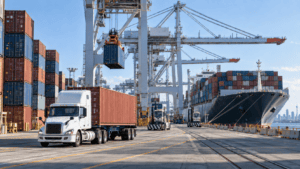
| Drayage | Short-distance container transportation, often involving a port or rail terminal |
| Transloading | Moving freight from one trailer, container, or transportation mode to another |
| Lumper | Third-party loading or unloading service |
| Accessorial | Additional service or charge beyond standard transportation |
| ELD | Electronic Logging Device used to record driver hours |
Knowing these basic terms can make freight quotes, shipping documents, and conversations with logistics providers much easier to understand.
Common Shipping Documents and Freight Terms
Bill of Lading (BOL)
A Bill of Lading, commonly called a BOL, is one of the most important documents in freight transportation.
It identifies shipment information such as the shipper, consignee, freight description, number of pieces, weight, and pickup and delivery details.
Drivers, carriers, warehouses, and receivers may all rely on the BOL throughout the shipment.
Proof of Delivery (POD)
A Proof of Delivery, or POD, confirms that a shipment reached its destination.
The POD commonly includes the delivery date, receiver information, and a signature or other confirmation showing that the freight was received.
Shipper
The shipper is the person or business sending the freight.
The shipper is usually responsible for preparing the cargo, providing accurate shipment information, and having the freight ready for pickup.
Consignee
The consignee is the person or business receiving the freight at its final destination.
You may also hear the consignee referred to simply as the receiver.
Carrier
A carrier is the transportation company that physically moves the freight.
In trucking, this is generally the motor carrier operating the truck and equipment used for the shipment.
Freight Broker
A freight broker arranges transportation between a shipper and a carrier.
Rather than physically transporting the freight, the broker helps coordinate equipment, pricing, scheduling, communication, and shipment requirements.
FTL, LTL and Freight Shipping Terms
Full Truckload (FTL)
Full Truckload, or FTL shipping, means a truck or trailer is dedicated to one shipment.
FTL is commonly used for larger shipments, time-sensitive freight, high-value cargo, or loads that benefit from fewer handling points and more direct transportation.
Less Than Truckload (LTL)
Less Than Truckload, or LTL shipping, allows smaller freight shipments to share trailer space with freight from other customers.
LTL is commonly used for palletized freight that does not require an entire trailer.
Titan has a separate guide that goes deeper into choosing between these two transportation options.
FTL vs. LTL Shipping: How to Choose the Right Freight Option
Freight Class
Freight class is used primarily when rating LTL freight.
Under the National Motor Freight Classification system, freight classes range from 50 to 500 and are determined using four main transportation characteristics: density, handling, stowability, and liability.
The correct freight class can affect LTL pricing, so accurate dimensions, weight, packaging, and commodity information are important.
Learn more about freight classification from NMFTA
Linehaul
Linehaul is the main long-distance portion of a freight movement between cities, terminals, or regions.
For example, an LTL shipment may have a local pickup, a longer linehaul movement between terminals, and then a local final delivery.
Trucking Lingo for Delays, Loading and Extra Services
Detention
Driver detention is an hourly charge that can apply when loading or unloading takes longer than the carrier’s allotted free time.
Many carriers typically allow up to two hours of free loading or unloading time, although the exact allowance and detention rate depend on the carrier and shipment agreement.
For example, if a driver arrives for a scheduled pickup and spends four hours waiting to be loaded, detention may begin after the included free time expires.
Layover
A layover may occur when a delay prevents a driver from continuing the shipment as planned and requires an extended wait, often into another day.
Layover charges can result from scheduling problems, facility closures, freight not being ready, or other significant delays.
Accessorial Charge
An accessorial is an additional service or charge outside the standard transportation rate.
Common freight accessorials can include:
- Detention
- Liftgate service
- Inside delivery
- Driver assist
- Limited-access delivery
- Additional stops
- Redelivery
Identifying these requirements before booking can help create a more accurate freight quote and reduce unexpected charges.
Lumper
A lumper is a third-party worker or service used to load or unload freight, commonly at warehouses and distribution centres.
A lumper fee may be charged separately from the transportation cost.
Drop and Hook
Drop and hook means a driver drops one trailer at a facility and connects to another trailer that is already loaded or ready to move.
This can reduce the amount of time a driver spends waiting for live loading or unloading.
Deadhead
Deadhead refers to miles a truck travels without freight.
For example, a carrier may need to drive empty from its previous delivery location to the pickup point for the next shipment.
Backhaul
A backhaul is freight moving on a carrier’s return route after completing an outbound delivery.
Backhaul opportunities can help carriers reduce empty miles and make better use of available capacity.
Common Truck and Trailer Terms
Dry Van
A dry van is an enclosed trailer commonly used for palletized and general commercial freight that does not require temperature control.
Dry vans help protect freight from weather and are one of the most commonly used trailer types in trucking.
Reefer
A reefer is a refrigerated trailer designed to transport freight that requires controlled temperatures.
Reefers are commonly used for food, beverages, pharmaceuticals, and other temperature-sensitive products.
Flatbed
A flatbed trailer has an open deck without permanent walls or a roof.
Flatbeds are commonly used for construction materials, machinery, steel, oversized freight, and cargo that needs to be loaded from the side or by crane.
Step Deck
A step deck, sometimes called a drop deck, has a lower main deck than a standard flatbed.
The lower deck allows taller freight to be transported while helping the shipment remain within legal height restrictions.
RGN
RGN stands for Removable Gooseneck.
An RGN trailer can lower the front portion of the deck to the ground, creating a ramp that allows equipment such as excavators, loaders, and other machinery to be driven onto the trailer.
Port, Warehouse and Freight Transfer Terms
Drayage
Drayage is the short-distance transportation of containerized freight.
It commonly refers to moving a shipping container between a marine port, rail terminal, warehouse, distribution centre, transload facility, or consignee.
Transloading
Transloading means transferring freight from one transportation unit or mode to another.
For example, cargo may be removed from an ocean container and transferred into a dry van, flatbed, step deck, or another trailer for inland delivery.
Cross-Docking
Cross-docking involves moving freight through a warehouse or terminal with little or no long-term storage.
Freight arrives, is sorted or transferred, and then continues toward its next destination.
Technology Terms Used in Trucking and Logistics
Electronic Logging Device (ELD)
An Electronic Logging Device, or ELD, electronically records a commercial driver’s driving time and other hours-of-service information.
The Federal Motor Carrier Safety Administration maintains information about the U.S. ELD rule and its list of registered, self-certified devices.
Learn more about Electronic Logging Devices from FMCSA
Transportation Management System (TMS)
A Transportation Management System, or TMS, is software used to help manage freight transportation.
A TMS can support shipment planning, dispatching, tracking, documentation, carrier management, communication, and reporting.
Telematics
Telematics combines technologies such as GPS, vehicle data, and wireless communication to provide information about trucks and freight movements.
Telematics can be used for tracking, routing, vehicle performance, and fleet management.
Frequently Asked Questions About Trucking Terms
What Does FTL Mean in Trucking?
FTL means Full Truckload. The truck or trailer is dedicated to one shipment rather than combining freight from several customers.
What Does LTL Mean in Shipping?
LTL means Less Than Truckload. Smaller shipments share trailer capacity with other freight instead of requiring an entire trailer.
What Is Detention in Trucking?
Driver detention is additional waiting time during loading or unloading after the carrier’s allotted free time has expired. Detention is typically charged by the hour.
What Is an Accessorial Charge in Freight?
An accessorial is a charge for a service outside the standard transportation rate, such as detention, liftgate service, inside delivery, driver assist, additional stops, or redelivery.
What Is the Difference Between a Shipper, Carrier and Freight Broker?
The shipper sends the freight, the carrier physically transports it, and the freight broker helps arrange and coordinate transportation between the shipper and carrier.
Understanding Freight Terminology Makes Shipping Easier
You do not need to work in trucking every day to understand the language of freight.
Knowing common trucking terms, logistics terminology, freight shipping terms, trucking acronyms, and shipping jargon can help you understand quotes, communicate shipment requirements, identify potential additional charges, and make more informed transportation decisions.
Whether you are shipping one pallet by LTL, booking a full truckload, moving a container from a port, or coordinating specialized equipment, understanding freight terminology makes the entire process easier.
Titan Transline helps businesses move LTL, FTL, cross-border, flatbed, temperature-controlled, oversized, and specialized freight throughout Canada and the United States.
Have a freight term you don’t understand or need help planning a shipment? Contact Titan Transline and our team can help you determine the right transportation solution.