
FTL vs LTL Shipping: Why the Right Choice Matters
Choosing between FTL and LTL shipping can feel confusing when your freight is too large for parcel delivery but too small to obviously fill a full trailer. Some shipments need the most cost-effective option. Others need faster delivery, fewer touchpoints, dedicated trailer space, or more control over pickup and delivery timing.
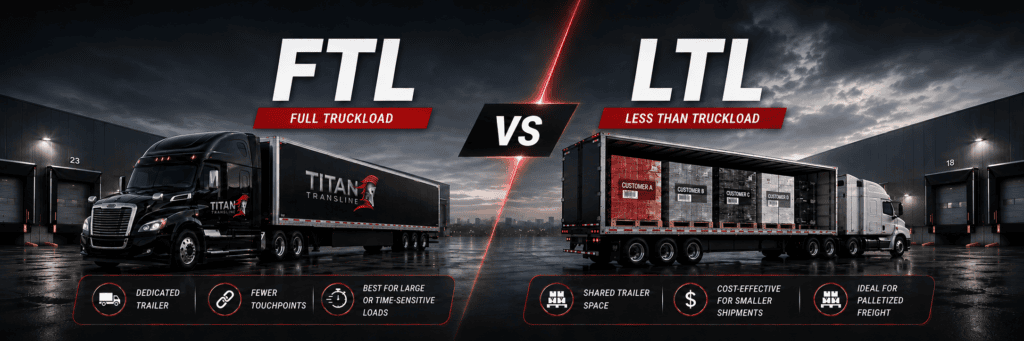
FTL stands for full truckload. It means your freight moves with dedicated trailer space, usually with more direct control from pickup to delivery.
LTL stands for less than truckload. It means your freight shares trailer space with other shipments moving through a freight network.
Both options can be the right choice. The better question is not simply “Which one is cheaper?” The better question is “Which option protects the freight, meets the timeline, and fits the shipment requirements?”
For many businesses, the answer depends on the size of the load, how urgently it needs to arrive, how much handling it can tolerate, and whether the pickup or delivery location has special requirements.
What Is the Difference Between FTL and LTL Shipping?
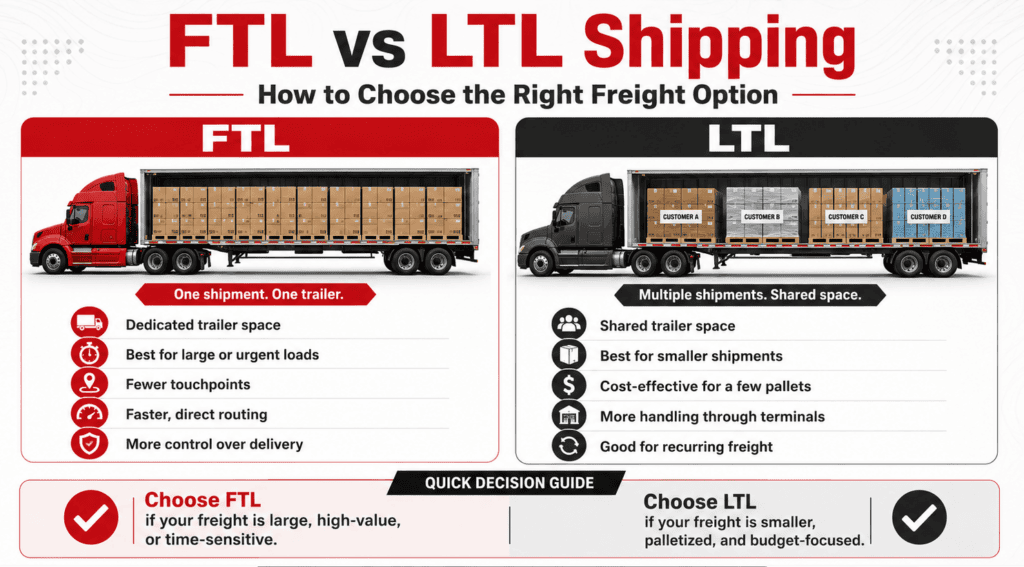
The main difference between FTL and LTL shipping is trailer space. FTL shipping gives one shipment dedicated trailer space. LTL shipping allows multiple shipments from different customers to share trailer space.
FTL is often used when freight is larger, urgent, sensitive, high-value, or needs direct delivery. LTL is often used when freight is smaller, palletized, and does not need the full space of a trailer.
Here is a simple comparison:
| Factor | FTL Shipping | LTL Shipping |
| Best for | Larger, urgent, high-value, or direct freight | Smaller palletized freight |
| Trailer space | Dedicated trailer space | Shared trailer space |
| Handling | Fewer touchpoints, or sealed trailers | More handling through shared networks |
| Speed | Faster and more direct | Longer transit times depending on routing |
| Cost | Better value for larger or urgent loads, more expensive than LTL | Often more cost-effective for smaller loads |
| Freight protection | More control and less rehandling | Requires extra precaution due to multiple transfers; best suited for well-packaged, secure, and stackable freight |
| Common use | Full loads, sensitive freight, direct delivery | Skids, pallets, recurring smaller shipments |
What Is FTL Shipping?
FTL shipping provides exclusive use of a trailer for a single shipment. While often associated with large loads, FTL is also chosen for control, speed, and reduced handling.
When Businesses Use FTL Shipping?
- Larger shipments that fill much of a trailer
- High-value freight that needs more control
- Time-sensitive deliveries
- Freight that should not be rehandled multiple times
- Manufacturing materials
- Retail inventory
- Construction products
- Machinery or industrial freight
- Cross-border freight that needs strong coordination
- Freight requiring a sealed trailer
- Freight that cannot be stored or mixed with other commodities
- Remote locations
The main benefit of FTL is control. The freight has dedicated space, fewer touchpoints, and a more direct movement from origin to destination. This can reduce damage risk and help businesses plan around tighter pickup and delivery windows.
What Is LTL Shipping?
LTL shipping allows multiple shipments to share trailer space. Shippers pay only for the portion of space their freight occupies.
When Businesses Use LTL Shipping?
- One to six pallets
- Smaller commercial freight
- Boxed, crated, or palletized goods
- Routine replenishment
- Warehouse transfers
- Regional deliveries
- Cross-border shipments
- Freight that may need liftgate service or appointment delivery
- Lighter freight – sub 1000 lbs per skid
- Freight that can be stacked
- Freight that is not urgent
The main benefit of LTL is cost efficiency. A business can move freight without paying for unused trailer space. However, LTL freight may move through terminals and be handled more often than FTL freight, so packaging, measurements, freight class, and delivery details matter.
Is FTL or LTL Better for My Shipment?
There is no one-size-fits-all answer. The right choice depends on several key factors:
- Shipment size and weight
- Delivery timeline
- Freight value and sensitivity
- Handling requirements
- Pickup and delivery conditions
- Route complexity
General Rule –
- Choose FTL for speed, control, and reduced handling
- Choose LTL for cost savings on smaller shipments
When Should You Choose Full Truckload (FTL)?
1. Your Freight Uses Significant Trailer Space
If your shipment takes up more than half a trailer, FTL often becomes more cost-effective than large LTL shipments.
2. Your Delivery Timeline Is Critical
FTL provides direct routing, making it ideal for tight deadlines or production schedules. Delivery appointments with guaranteed timelines.
*LTL does not offer dedicated or guaranteed delivery appointments, even if an appointment is booked.
3. Your Freight Is High-Value or Fragile
Fewer crossdocking operations reduce the risk of damage or loss.
4. Your Shipment Cannot Be Mixed
Certain freight cannot be stacked or combined with other shipments.
*This can be due to the nature of the commodity (hazardous goods, food and beverage products, animal products, temperature-controlled products)
5. You Need Specialized Handling or Equipment
FTL supports custom routing, multi-stop deliveries, and specialized trailers.
When Should You Choose Less Than Truckload (LTL)?
1. Your Shipment Is Small
If your freight doesn’t require a full trailer, LTL helps avoid paying for unused space.
2. Budget Is a Priority
LTL is typically more affordable for smaller shipments.
3. Your Timeline Is Flexible
LTL shipments may take longer due to cross-docking at local pickup terminals to linehaul hubs and to scheduled departures from the network, rather than customer-specific timing.
4. Your Freight Is Properly Packaged
Strong palletization and labelling are essential for LTL success and to reduce the risk of damage.
5. You Ship Frequently in Smaller Quantities
LTL works well for recurring shipments and inventory replenishment.
What Information Do I Need for an FTL or LTL Freight Quote?
Before requesting a freight quote, it helps to have the right details ready. This allows the freight team to recommend the right option and avoid unnecessary quote changes.
Prepare the following information:
- Pickup address
- Delivery address
- Number of pallets, crates, or pieces
- Freight dimensions
- Freight weight
- Whether the freight can be stacked
- Pickup date
- Required delivery date
- Dock access at pickup and delivery
- Liftgate or special service needs
- Appointment requirements
- Cross-border details (customs broker information is not required for a quote; only required when booking a cross-border shipment)
- Loading or unloading conditions
Why a Personalized Freight Quote Matters
Freight rates are not based on distance alone. It depends on:
- Shipment size and weight
- Equipment requirements
- Delivery timing
- pickup and delivery location access
- Accessorial services
A personalized quote helps make sure the freight plan matches the load instead of forcing the load into the wrong shipping option.
For example, two shipments travelling the same distance may require very different pricing if one needs a dedicated trailer, one needs liftgate delivery, one has a firm appointment window, or one is moving across the Canada-U.S. border.
That is why a custom quote is important. It helps reduce guesswork and gives the shipper a clearer understanding of what the freight movement actually requires.
Common Mistakes Shippers Make When Choosing FTL or LTL –
Choosing LTL only because the rate looks lower
LTL may have a lower starting cost, but it is not always the best option for urgent, fragile, or high-value freight. If a delay or damage issue creates a bigger business cost, FTL may be the better value.
Choosing FTL when LTL would work
Not every shipment needs a dedicated trailer. If the freight is small, properly packaged, and not highly urgent, LTL may be a smarter choice.
Guessing freight dimensions
Incorrect dimensions or weight can lead to quote changes, delays, or extra charges, and in LTL shipping, this is a common issue. Even small discrepancies can trigger carrier reweighs or reclassifications, often increasing costs and transit times. It can also affect delivery windows, accessorials like liftgate or residential service, and carrier acceptance.
Always confirm shipment details before booking to avoid delays, fees, and unexpected surcharges.
Forgetting accessorial needs
Liftgate, appointment delivery, limited access, inside delivery, and driver assist needs should be included in the quote request.
Waiting too long to book
Short-notice shipments may limit available options. Planning earlier gives your freight team more flexibility.
How Does Titan Help Shippers Choose Between FTL and LTL?
Titan Transline helps businesses choose between FTL and LTL by reviewing the shipment as a whole. The team looks at size, weight, dimensions, timeline, route, handling needs, pickup conditions, delivery requirements, and equipment needs.
For larger or time-sensitive shipments, Titan can coordinate full truckload service with dedicated trailer space and direct delivery. For smaller shipments, Titan can support less than truckload shipping with flexible delivery options and clear communication.
This helps shippers avoid guessing. Instead of choosing a mode based only on price, Titan compares pricing and options, presents both available options along with a recommendation, and helps you understand the practical impact of each choice so you can request a personalized quote that fits the load, while still letting you choose the service that best suits your needs.
“The biggest thing we look at is how much freight you’re shipping, how much trailer space and weight it uses, and how quickly it needs to get there. If it’s just a few pallets without a tight deadline, LTL is usually the most economical choice. But if it’s time-sensitive, high-value, or fills most of a trailer, FTL is often the better option. The more information we have upfront is dimensions, weight, pickup and delivery requirements- the easier it is to quote the right service and avoid unnecessary costs or delays.”
~ Rachel Morrison, Titan Transline
What Makes Titan Different?
Many freight providers can give you a rate. Titan helps you understand which freight option actually fits the load.
What sets Titan apart is the combination of freight coordination, equipment access, cross-border support, and personalized service. Instead of giving a one-size-fits-all answer, Titan helps shippers compare FTL and LTL based on the shipment’s real requirements.
Titan provides:
- FTL and LTL shipping support across Canada and the U.S.
- Help choosing between dedicated trailer space and shared trailer space
- Support for cross-border freight coordination
- Access to different trailer and equipment options
- Guidance on pickup, delivery, and accessorial requirements
- A custom quote based on shipment details, not guesswork
- Communication that helps shippers understand what to expect before the load moves
For businesses that do not ship freight every day, this guidance can make a major difference. It helps reduce confusion, prevent avoidable delays, and make freight decisions easier.

FAQs
Can I switch from LTL to FTL after booking?
In some cases, yes. If your shipment grows in size or urgency changes, your carrier or broker may be able to upgrade the shipment to FTL, depending on availability and timing.
What happens if my LTL shipment is damaged?
LTL shipments involve more handling, so damage claims can occur. Proper packaging and documentation are essential, and claims must be filed with the carrier following their process.
When is less than truckload shipping the better choice?
Less than truckload shipping is often better when the shipment is smaller, properly packaged, and cost control is a priority. It works well for pallets, crates, and recurring smaller shipments.
Can I track both FTL and LTL shipments?
Tracking is available for both options, ltl service is no guaranteed so they will always be estimated timelines, transit times are longer and have more variance, so there are delays in the approximate shipping timelines. FTL are much easier; you know where the truck stops are, as they aren’t making extra stops to pick up other freight or can experience delays from other orders or crossdocks.
Is LTL always cheaper than FTL?
No. LTL is often more cost-effective for smaller shipments, but larger LTL shipments can become expensive. If the load is large, urgent, or sensitive, FTL may offer better value.
Why is FTL sometimes worth the higher cost?
FTL can be worth the higher cost when it reduces handling, improves delivery control, protects higher-value freight, or helps meet a firm delivery deadline. In some cases, it is also the only viable transportation option, as certain areas and shipments can only be moved via FTL due to route limitations, infrastructure constraints, or the nature of the cargo.
What details does Titan need for an FTL or LTL quote?
Titan needs the pickup and delivery locations, commodity, freight dimensions, weight, number of pallets or pieces, timing, equipment needs, and any special pickup or delivery requirements.
Can Titan help compare FTL and LTL rates?
Yes. Titan can help compare FTL and LTL options based on cost, timing, handling needs, route, and delivery requirements so the shipper can choose the best option for the load.
Does Titan provide custom freight quotes?
Yes. Titan provides custom freight quotes based on the shipment details, route, equipment needs, delivery timing, and service requirements.
Ready to Choose the Right Freight Option?
FTL and LTL both serve important purposes. The right choice depends on your load, timeline, budget, and delivery needs.
If your shipment needs dedicated control, FTL may be the better fit.
If your freight is smaller and properly packaged, LTL may be the more cost-effective option.
Need help deciding?
Titan Transline can review your shipment details and prepare a custom quote based on the freight, route, timing, and service requirements.