
Warehouse storage solutions play a critical role in modern logistics and supply chain management. Efficient storage directly impacts operational speed, labor costs, product safety, and order fulfillment accuracy.
In practice, businesses must make two key decisions: how long inventory stays in storage and how teams handle it within the warehouse. At Titan Transline, we provide flexible warehouse storage solutions designed to meet your operational needs.
What Is Warehouse Storage?
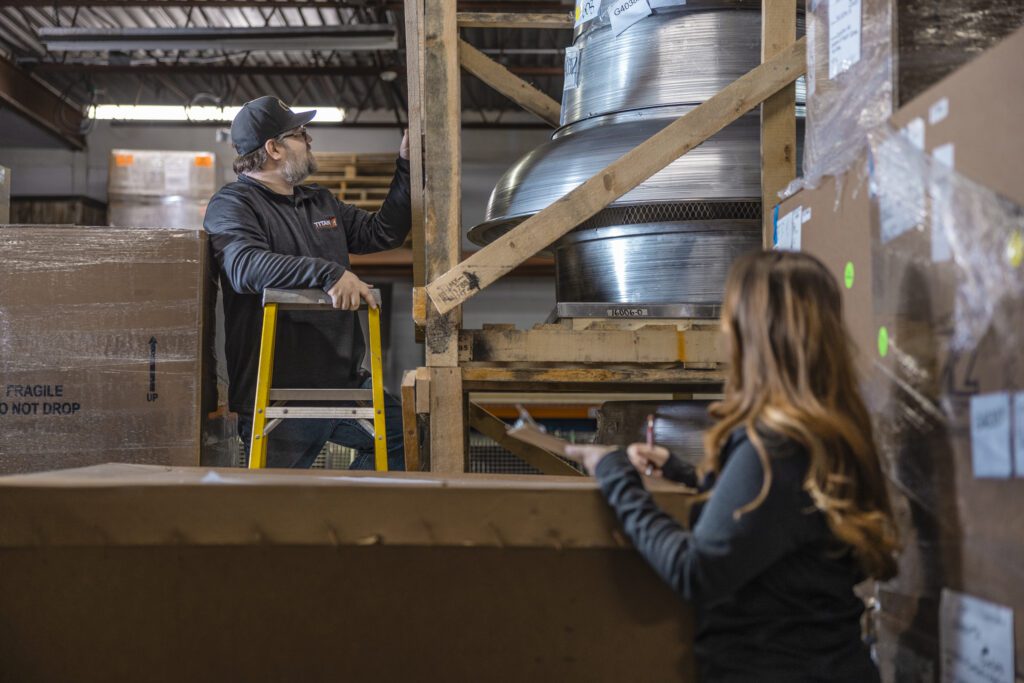
Warehouse storage solutions refer to the organized placement of goods within a registered and insured warehousing facility. This approach ensures safe storage and efficient retrieval.
Several factors influence the right storage strategy, including:
- Inventory turnover rates
- Product size and weight
- Handling requirements
- Order fulfillment speed
- Seasonal demand
As a result, most warehouses combine multiple storage methods to balance speed, accessibility, and space efficiency. In addition, industry organizations like the Material Handling Industry (MHI) provide guidance on warehouse systems and best practices.
Short-Term vs Long-Term Warehouse Storage
One of the most important decisions in warehouse management is determining how long inventory will remain in storage. Once the length of storage is established, warehouse teams can decide where products should be placed, how accessible they need to be, and what storage methods will best support operational efficiency.
Short-Term Storage
Businesses use short-term warehouse storage procedures for inventory held for a brief period—typically from a few hours to several days.
Key Characteristics:
- High inventory turnover
- Easy access near shipping and receiving areas
- Minimal handling
- Often staged on floors or temporary setups
- Optimized for speed over storage density
Common Uses:
- Order staging before shipment
- Cross-docking operations
- E-commerce fulfillment
- Daily replenishment inventory
- Incoming goods awaiting sorting
Because products move quickly, accessibility becomes more important than space optimization.
Long-Term Storage
Companies design long-term warehouse storage for inventory that remains in place for weeks, months, or longer. Once inventory is designated for long-term storage, teams can focus on maximizing space, maintaining organization, and ensuring products are stored safely over time.
Key Characteristics:
- Lower turnover rates
- Structured storage systems
- High storage density
- Organized and labeled inventory
- Typically located deeper within the warehouse
Common Uses:
- Seasonal inventory
- Bulk or reserve stock
- Raw materials
- Safety stock
- Slow-moving products
In long-term storage, the focus shifts to maximizing space, organization, and inventory protection. As a result, structured systems become essential. Publications like Inbound Logistics also highlight how efficient storage strategies improve supply chain performance.
Staging and Racking Systems
In addition to storage duration, warehouses must determine how teams physically handle and position inventory. Staging and racking systems are not competing methods; instead, they serve different roles within the same operation.
Warehouse Staging
Teams use staged overnight storage to place goods (typically on pallets) near shipping or receiving areas for quick processing.
When Staging Is Used:
- Late-day inbound shipments
- Early morning outbound deliveries
- High-throughput operations
- Uncertainty on placement or procedures
- Inventory management or inspections
Advantages:
- Faster loading and unloading
- Reduced handling and labor costs
- Ideal for high-velocity inventory
- Supports efficient next-day workflows
- Ease of access
Considerations:
- Uses valuable floor space
- Can create congestion if not managed properly
- Not suitable for long-term storage
For these reasons, operations teams rely on staging. In other words, staging supports speed over storage density.
Racking Systems
Racking systems store pallets vertically and improve space utilization and organization.
Common Types:
- Selective pallet racking
- Drive-in racking
- Push-back racking
- Pallet flow racking
- Cantilever racking
Advantages:
- Maximizes vertical warehouse space
- Improves inventory organization
- Enhances safety and accessibility
- Increases overall storage capacity
- Improves and enforces safety standards
Considerations:
- Requires equipment such as forklifts
- Adds handling time for fast-moving goods
- Higher setup and maintenance costs
Because of these benefits, warehouses use racking systems for long-term storage. In contrast, staging supports short-term movement.
Choosing the Right Warehouse Storage Strategy
The most efficient warehouses use a combination of storage methods based on operational needs.
Use Short-Term Storage When:
- Inventory turnover is high
- Products ship within 24–48 hours
- Fast access is critical
Use Long-Term Storage When:
- Inventory remains for weeks or months
- Organization and tracking are essential
- Space optimization is required
Use Staging When:
- Goods need to be quickly processed or shipped
- Inbound and outbound timing is tight
- Labor efficiency is a priority
Use Racking Systems When:
- Storage density is important
- Inventory must remain organized
- Warehouse space needs to be maximized
Balancing Efficiency and Capacity
Modern warehouses rely on a hybrid storage model that combines multiple strategies.
For example, teams may stage fast-moving products near shipping docks. Meanwhile, they store reserve inventory in pallet racking. At the same time, incoming shipments are often staged before moving into long-term storage.
By aligning storage strategies with inventory flow, companies improve productivity, reduce costs, and enhance overall operational efficiency.
Optimize Your Warehouse Storage with Titan Transline
At Titan Transline, we provide flexible and scalable warehouse and logistics solutions to support your business growth. Whether you need short-term storage, long-term storage, staging, or racking systems, our team is here to help.
Contact Titan Transline today to explore our warehouse storage solutions and find the right fit for your business. As a result, the right warehouse storage solutions can significantly improve efficiency and reduce operational costs.
Frequently Asked Questions About Warehouse Storage
What is the difference between short-term and long-term warehouse storage?
Short-term storage is used for inventory that moves quickly—typically within hours or days—while long-term storage is designed for goods stored for weeks or months with a focus on organization and safety.
What is staging in a warehouse?
Staging in a warehouse refers to placing goods near shipping or receiving areas so teams can quickly process, load, or move them. It is typically used in short-term, high-volume operations to improve efficiency and reduce handling time.
When should a warehouse use racking systems?
Racking systems are best when inventory needs to be stored for longer periods, when space optimization is important, or when better organization and safety are required.
Is staging inventory efficient?
Yes, staging improves efficiency for fast-moving goods and time-sensitive shipments. However, it should be used primarily for short-term storage due to space limitations and increased traffic around the freight.
What type of warehouse storage is best for my business?
The best solution depends on your inventory turnover, product type, and operational needs. Most businesses benefit from a combination of staging and racking systems. Contact our warehouse department to find out today!