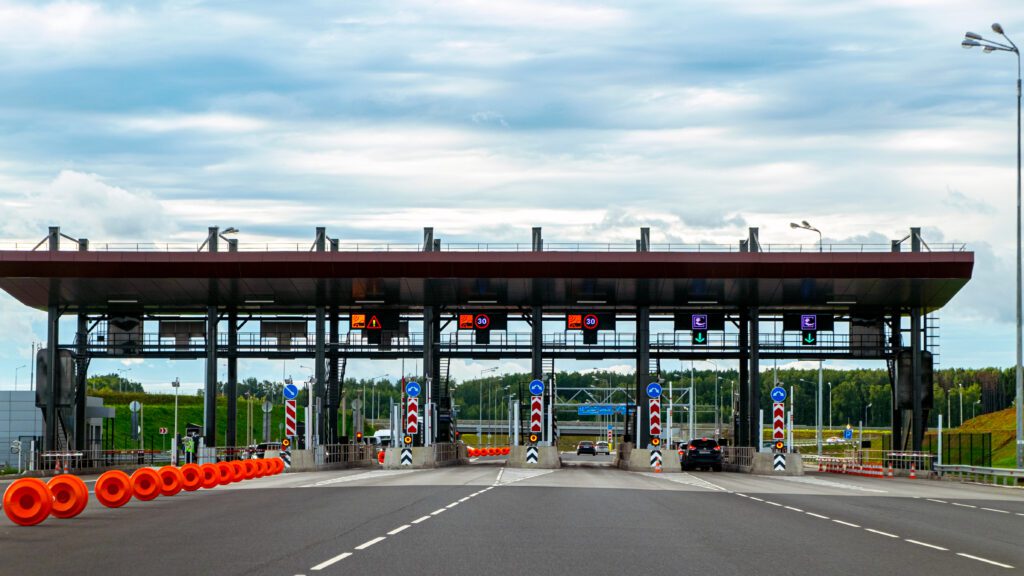

Trucking Customs Clearance in the CARM Era: Avoiding Added Charges and Keeping Freight Moving Smoothly
When freight crosses the U.S.–Canada border, precision and preparation are everything. Even a single missing document can delay a shipment, result in added fees, or trigger penalties. With the Canada Border Services Agency (CBSA) having rolled out its CARM (CBSA Assessment and Revenue Management) system, trucking customs clearance is entering a new era of digital accountability.
This article breaks down everything shippers, carriers, and customs brokers need to know—from paperwork requirements and CARM registration to avoiding added charges for incomplete documentation.
What Is Trucking Customs Clearance?
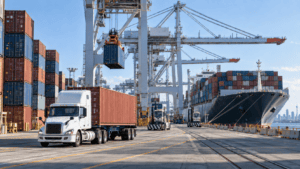
Trucking customs clearance is the process that allows freight to legally enter or exit Canada through a border crossing. It involves verifying cargo contents, submitting accurate declarations, paying applicable duties/taxes, and ensuring all documentation meets CBSA and U.S. Customs and Border Protection (CBP) requirements.
For cross-border trucking, clearance must be completed before the truck arrives at the border. If information is incomplete or incorrect, trucks can be held, delayed, or fine, costing both carriers and shippers time and money.
The Role of CARM in Freight Customs
CARM (CBSA Assessment and Revenue Management) is CBSA’s new digital platform designed to modernize how duties and taxes are assessed and collected on imported goods. It affects all importers, customs brokers, and carriers involved in freight customs clearance.
Key features of CARM CBSA include:
- Importer Registration: All importers must register their business accounts on the CARM Client Portal (CCP).
- Release Prior to Payment (RPP): Importers now need their own financial security (a customs bond) to qualify for RPP, rather than relying on their customs broker’s bond.
- Digital Documentation: All declarations, corrections, and payments are processed online via CARM, improving transparency and tracking.
- Mandatory Use: Once fully implemented, CARM will be required for all import declarations.
For carriers and truckers, this means that clearance information must be accurate, electronically submitted, and pre-approved to prevent border delays.
Added Charges for Incomplete or Incorrect Paperwork
Incomplete or inaccurate customs paperwork can lead to serious financial consequences. Common extra costs include:
- Administrative or correction fees from customs brokers for reprocessing entries.
- Border delay charges such as waiting time or layover costs if the truck is held.
- Carrier penalties for non-compliance or missing pre-arrival documentation.
- Storage or demurrage fees if goods are detained while waiting for clearance.
Errors as small as missing commodity codes, mismatched weights, or missing importer numbers can cause shipments to be flagged for inspection or outright refused entry.
Required Paperwork for Truckers at the Border
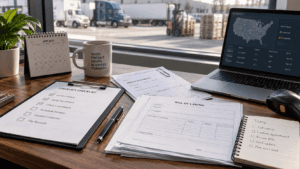
Truck drivers play a key role in trucking customs clearance, acting as the final link between the carrier, broker, and border authorities. To ensure smooth passage, drivers must be provided with and carry:
- Bill of Lading (BOL) – Lists the goods being transported, their value, and the shipper/consignee information.
- Commercial Invoice – Provided by the shipper, detailing product descriptions, quantities, and transaction value.
- Customs Invoice (CI) – Required for shipments over CAD $2,500 or certain categories of goods; lists full details for customs valuation.
- Cargo Control Document (CCD) / PARS or PAPS Number – Pre-arrival reference numbers used for Canada-bound (PARS) or U.S.-bound (PAPS) shipments.
- Driver Identification – Valid passport, FAST card, or other CBSA-approved ID.
- Carrier Code – The unique CBSA code that identifies the carrier transporting the goods.
- Load Sheet or Manifest – A summary of the freight being carried, typically required for cross-border trucking.
Drivers are required to verify with dispatch and their customs broker that the shipment has been “released” before reaching the border. If the broker has not submitted the required documentation, the truck will be held to avoid border delays and additional charges.
Customs Broker Responsibilities
A customs broker acts as the intermediary between importers/exporters and the CBSA (or CBP in the U.S.), ensuring that all customs procedures and declarations are handled properly.
Their main responsibilities include:
- Preparing and submitting customs declarations and release requests.
- Ensuring goods are correctly classified with the proper HS (Harmonized System) codes.
- Calculating duties, taxes, and fees accurately.
- Coordinating with carriers to confirm release status (PARS/PAPS).
- Managing communication between CBSA and importers.
- Helping importers register and comply with CARM CBSA requirements.
Under the new CARM system, customs brokers remain critical, but importers must now take greater ownership of compliance, as they are responsible for ensuring that their CARM accounts are active and correctly linked to their brokers.
How to Avoid Delays and Added Costs
To keep freight moving and avoid added charges, both shippers and carriers should:
- Register for CARM Early
Importers should ensure their CARM Client Portal account is active and their customs broker is linked. - Double-Check Paperwork
Confirm all fields (e.g., HS codes, origin country, values) match across invoices, bills of lading, and customs documents. - Communicate with Your Broker
Verify that PARS/PAPS numbers are processed and released before arrival. - Train Drivers on Border Protocols
Drivers should know what documents they must carry, how to verify release status, and what to do if a shipment is held. - Use a Reliable Cross-Border Carrier
Work with cross border trucking companies experienced in customs documentation and CARM compliance.
As CARM CBSA reshapes how Canadian imports are declared and managed, accuracy and accountability have never been more important. Whether you’re a shipper, carrier, or broker, success in trucking customs clearance depends on preparation, documentation, and proactive communication.
By ensuring paperwork is complete, brokers are aligned, and drivers are trained, you can keep your freight moving seamlessly across the border and avoid costly surprises this peak season and beyond. Reach out to Titan Transline today for help with your cross-border move!